When the Director's Cut Breaks the Universe: How Streaming's Alternate Versions Are Tearing Fandoms Apart
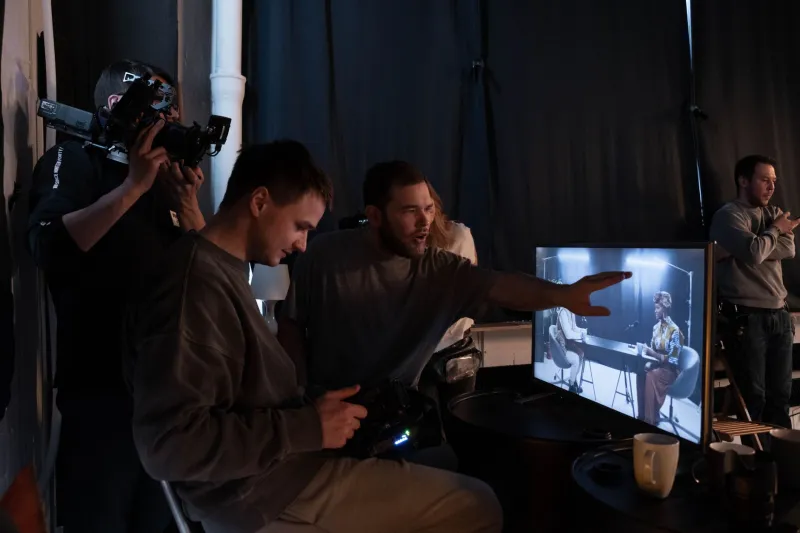
Here's a thought experiment that should feel familiar if you've spent any real time in genre fandom: you've spent years building your understanding of a fictional universe. You know the lore, the character motivations, the plot logic. You've debated it in forums, written about it, maybe even created something inspired by it. Then a streaming platform drops a four-hour director's cut with seventeen minutes of previously unseen footage — and suddenly, a character's entire arc means something different. A villain's motivation shifts. A death that defined a storyline? Now ambiguous.
Congratulations. You're living in the multiverse. Except nobody told you which version is the real one.
The Streaming Era's Dirty Little Secret
When HBO Max released Zack Snyder's Justice League in 2021, it didn't just give fans a longer movie. It detonated a continuity bomb. The theatrical cut — the one that had technically been the official, studio-sanctioned version of the DC Extended Universe for years — suddenly felt like an imposter. Characters were reframed. Plotlines that had been resolved in subsequent films now sat awkwardly against a version of events that contradicted them. The Snyderverse, as fans came to call it, wasn't just a different cut. It was functionally a different universe.
And the DCEU isn't alone. Peter Jackson's extended Lord of the Rings cuts introduced material that quietly reshaped how viewers understood character relationships and story geography. The various versions of Ridley Scott's Blade Runner — there are at least seven distinct cuts floating around — have spawned decades of debate about whether Deckard is a replicant, a question the theatrical version answers very differently than the Final Cut. Even something as seemingly straightforward as the original Star Wars trilogy has splintered into competing canons depending on which release year you consider authoritative.
This isn't new, exactly. But the streaming era has turbocharged the problem. Platforms need content. Studios have vaults. And "lost" or "restored" footage has become a reliable way to generate headlines and subscriber interest. The downstream effect on fictional universes, though, is becoming genuinely chaotic.
Canon Isn't What It Used to Be
For genre fandoms, canon is load-bearing infrastructure. It's the agreed-upon foundation that makes shared conversation possible. When a studio or platform releases an alternate version of a canonical text, they're not just offering fans more content — they're introducing a forking path into the timeline of a shared fictional world.
Fans have been navigating this for decades through fan fiction and headcanon, of course. But there's a meaningful difference between a fan choosing to imagine an alternate version of events and a rights-holding studio officially releasing one. The latter carries institutional weight. It suggests legitimacy. And in an era where streaming platforms are the primary gatekeepers of what gets seen, that legitimacy question gets thornier.
Take the ongoing conversation around James Cameron's extended cuts of Avatar: The Way of Water. Additional scenes don't just add runtime — they add context that reframes character decisions. For fans trying to build consistent theories about the world of Pandora across films, every new cut is another variable to account for. Which version anchors the timeline? Which one do you cite when you're making an argument about what a character would or wouldn't do?
"It's like watching a multiverse collapse in real time," one longtime genre fan put it in a Reddit thread that racked up thousands of upvotes last year. "Every new version is technically an alternate universe, but we're all supposed to pretend there's still one canon."
The Creator's Dilemma
Creators are caught in a genuinely weird position here. Directors who've fought for years to get their original vision released — Snyder being the most prominent recent example — have legitimate artistic grievances. Studio interference is real, and theatrical cuts are sometimes compromised works. The director's cut, in that framing, isn't an alternate version. It's the correct version.
But from a universe-management perspective, that argument has costs. When you retroactively establish a new canonical baseline, you're asking fans to mentally rewrite years of accumulated understanding. Tie-in novels, comic adaptations, and fan works that were built on the theatrical cut don't automatically update. The broader multimedia ecosystem of a franchise doesn't get a patch. It just becomes inconsistent.
Some studios have tried to manage this by explicitly designating certain cuts as non-canonical — essentially treating the director's cut as an officially sanctioned alternate universe rather than a correction to the main timeline. It's a reasonable solution in theory. In practice, fans don't always cooperate. The version they find more emotionally resonant tends to become their personal canon regardless of what the studio says, which is how you end up with a fandom that can't agree on basic facts about the world they're supposedly all inhabiting together.
The Alternate Universe Framing Actually Helps
Here's where things get interesting from a multiverse perspective. If we stop treating different cuts of the same film as competing claims to a single truth — and start treating them as genuinely separate universe branches — a lot of the friction dissolves.
This isn't a new framework for science fiction fans. We already accept that the Marvel Cinematic Universe and the Marvel Comics universe are distinct entities with overlapping DNA. We accept that different adaptations of the same source material can coexist without one invalidating the others. The animated Batman series and the Tim Burton films and the Nolan trilogy aren't versions of the same universe. They're separate universes that happen to share a character.
Applying that logic to director's cuts and extended editions feels like a natural extension. The theatrical Blade Runner and the Final Cut aren't competing truths about whether Deckard is a replicant. They're two universes where the answer is different. Both are real. Neither cancels the other out.
The problem is that this framing requires a level of intellectual flexibility that fandom doesn't always extend to properties it's deeply invested in. When you love something, you want there to be a definitive version of it. The multiverse is a great concept until it's your favorite franchise that's splitting at the seams.
Where This Goes From Here
Streaming platforms aren't going to stop releasing alternate cuts. If anything, the economics push in the other direction — vaulted footage is cheap content, and director's cut releases generate reliable engagement spikes. As long as that's true, fictional universes are going to keep accumulating variants.
The smarter franchises will probably start building this into their canon architecture deliberately — treating official alternate cuts as in-universe divergence points rather than pretending a single authoritative version exists. Some already are, if informally.
For the rest of us, maybe the multiverse framework is actually the most honest way to engage with the media landscape we've got. Every cut is a universe. Every version is real somewhere. The theatrical release and the director's cut aren't fighting over the same timeline — they're each anchoring their own.
Which one you call home is up to you.


