Step Into the Wreckage: The Job Interview Trend That Makes You Roleplay Your Most Catastrophic Self
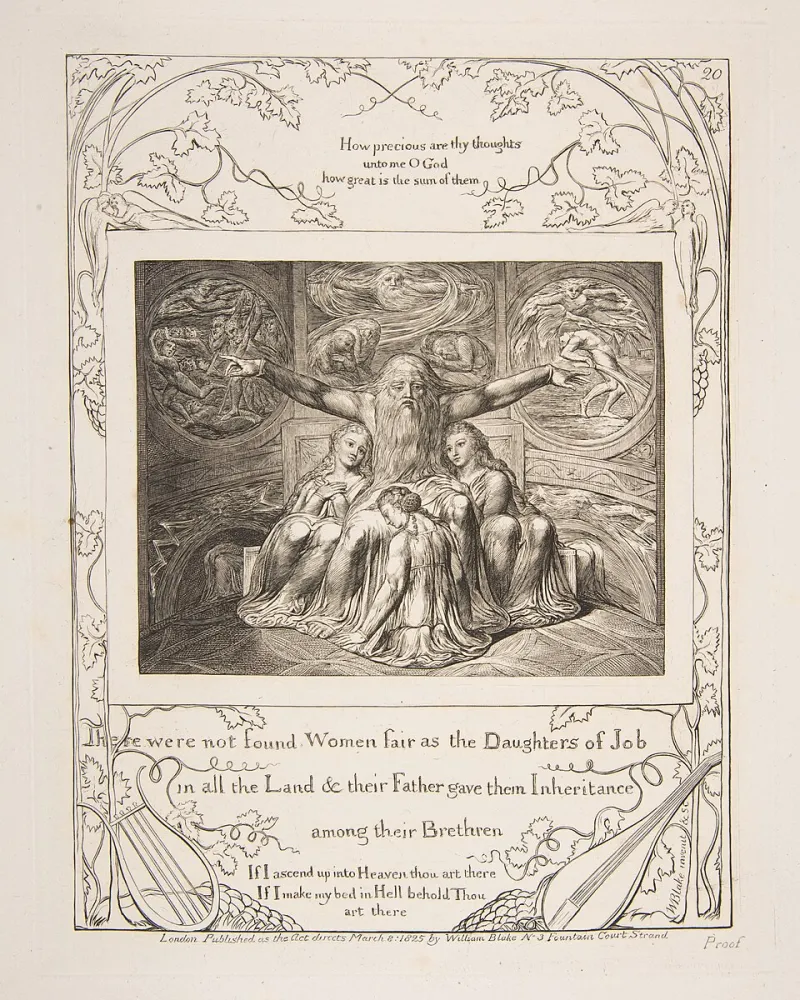
Photo: William Blake, CC0, via Wikimedia Commons
You're sitting in a conference room — or more likely, a slightly laggy Zoom call — when the interviewer leans forward and says something that stops you cold. Not "Tell me about a time you failed." You've rehearsed that one. No, this is different. "I'd like you to become the version of yourself who made every wrong decision in the last five years. Speak as that person. Defend their choices. Show me who they are."
Welcome to the frontier of modern hiring — where alternate-universe thinking has jumped from sci-fi fandom and quantum physics discourse straight into your next job application.
From Hypothetical to Full Persona Adoption
The classic behavioral interview question — beloved by HR departments since roughly the dawn of PowerPoint — asks candidates to reflect on past mistakes or imagine future ones. It's uncomfortable, sure, but it's retrospective. You're an observer of your own history.
What's emerging now is something far stranger. A growing number of hiring managers, particularly in high-stakes sectors like tech, finance, consulting, and healthcare administration, are pushing candidates to embody a divergent self. Not describe one. Not analyze one. Become one — at least for the duration of the interview.
Recruiters who've adopted this approach describe it as "deep-frame scenario testing" or, in one particularly memorable LinkedIn post that went quietly viral last spring, "timeline immersion interviewing." The idea is borrowed loosely from improvisational theater, cognitive behavioral therapy techniques, and — whether they admit it or not — a cultural moment thoroughly saturated in multiverse logic.
"We've all been marinating in this idea that there's a version of us out there who zigged when we zagged," said one talent acquisition lead at a mid-sized SaaS company in Austin who asked to remain anonymous because, in her words, "HR would lose their minds if this got out formally." "I want to know if a candidate can inhabit that person without falling apart. Because real leadership means understanding your shadow self."
The Psychology Behind the Chaos
There's actual science lurking beneath the weirdness here, even if the application is... let's call it aggressive.
Research in counterfactual thinking — the psychological study of "what if" reasoning — consistently shows that people who can engage meaningfully with alternate outcomes tend to demonstrate stronger adaptive decision-making. The ability to mentally simulate a version of yourself who failed, and to understand why that failure was coherent and even logical from the inside, requires a level of cognitive empathy that standard interview formats rarely surface.
Dr. Priya Nair, a behavioral psychologist based in Chicago who consults for several Fortune 500 companies on hiring design, frames it this way: "There's a meaningful difference between someone who says 'I would never make that mistake' and someone who can genuinely articulate the internal logic of a self who did. The second person understands human fallibility at a structural level. They're often better managers, better collaborators, better at catching systemic risk."
But Nair is also quick to flag the landmines. "The line between illuminating vulnerability and inducing psychological distress is not a thick one. A lot of companies are playing with this tool without understanding what they're actually doing to people."
Candidates on the Other Side of the Table
That concern isn't abstract. Across Reddit threads, LinkedIn comment sections, and a handful of anonymous Glassdoor reviews, candidates are describing the aftermath of these interviews in terms that range from "weirdly clarifying" to "I needed a week to shake it off."
One software engineer in Seattle described being asked to roleplay a version of herself who had stayed at a toxic startup, never left an abusive work environment, and watched her career stagnate. "They wanted me to justify those choices in first person," she wrote. "By minute ten, I wasn't acting anymore. I was just... sad. And I couldn't tell if I'd passed or failed or if any of it was real."
A marketing director in Atlanta reported a similar experience with a sharper edge: he was asked to inhabit the version of himself who had taken a bribe. "They framed it as an ethics stress test. I understand the logic. But I drove home feeling genuinely dirty. Like I'd confessed to something I didn't do."
Not everyone walks away rattled. Some candidates report finding the exercise oddly freeing — a chance to externalize regrets and failures in a context where they're being evaluated for that honesty rather than in spite of it. "It was the most honest I've ever been in an interview," one project manager in Denver told us. "I basically auditioned my worst self and they hired me anyway. That felt like something."
The Ethics Nobody Wants to Talk About
Here's where things get genuinely complicated, and where 9ineverse readers — people who've spent real time thinking about what alternate selves mean — might have a sharper lens than most.
Multiverse theory, even in its pop-culture form, carries an implicit ethical weight. The alternate you isn't a cautionary tale. They're a full person, shaped by circumstances, constrained by context, making decisions that made sense from inside their timeline. When a hiring process asks you to perform that person as a stress test, it risks reducing genuine psychological complexity to a party trick.
"There's something troubling about weaponizing self-examination," says Marcus Webb, a career coach based in New York who works primarily with mid-career professionals. "Therapy asks you to explore your shadow self in a contained, supported environment. An interview is a power-imbalanced transaction where your livelihood is at stake. Those are not the same container."
The legal exposure alone should give companies pause. Depending on how these exercises are conducted, they could surface information about mental health history, personal trauma, or protected characteristics — none of which have any business being part of a hiring decision.
So Why Is It Spreading?
Because it feels like it works. And in a hiring landscape where everyone has been coached to death on behavioral questions, it cuts through the noise. Candidates can't rehearse becoming their worst-timeline self the way they can rehearse "Tell me about a challenge you overcame." The rawness is the point.
There's also a cultural current running underneath all of this that's hard to ignore. We live in a moment when the multiverse isn't just a Marvel plot device — it's a genuine framework people use to process regret, ambition, and identity. Everything Everywhere All at Once won Best Picture. Therapy culture has mainstreamed the idea of "parts work" and shadow selves. Quantum physics discourse has leaked into wellness Instagram. We are, collectively, a society that has gotten very comfortable with the idea that we contain multitudes — and that the versions of us who didn't make it deserve examination.
Hiring managers didn't create this moment. They're just exploiting it, for better or worse.
Navigate It or Refuse It — But Know What You're Walking Into
If you find yourself on the receiving end of a timeline immersion interview, a few things worth knowing: you are not obligated to go anywhere that feels genuinely unsafe. "I can engage with that conceptually, but I'd prefer not to adopt a first-person persona" is a complete and professional sentence.
If you choose to participate, the candidates who report the most positive experiences tend to approach it as a creative exercise rather than a confessional one. You're not excavating trauma. You're demonstrating range. Think of it less like therapy and more like the best kind of speculative fiction — you're building a character who happens to share your face, inhabiting their logic, and showing a hiring manager that you understand human complexity from the inside out.
Which, when you put it that way, sounds almost like something worth doing.
Just maybe not before you've had coffee.