Same Franchise, Different Universe: The Generational Canon War That's Splitting Fandom in Two
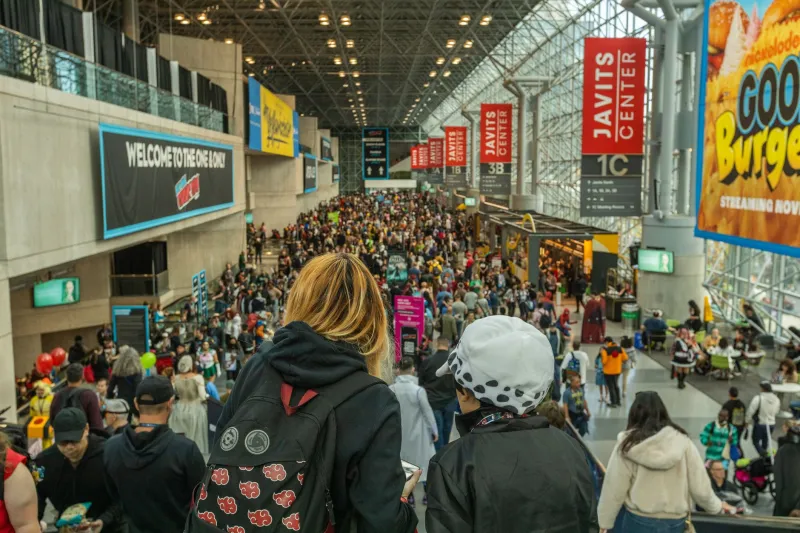
Picture two fans of the same long-running franchise. Both love it deeply. Both have read the wikis, watched the extended cuts, followed the writers on social media. Both would describe themselves as serious, knowledgeable fans.
Now put them in a room together and ask them which version of a major character arc is canonical.
They will not agree. They may not even understand how the other person arrived at their position. And if you push it far enough, one or both of them will conclude that the other person is not actually a fan of the same thing they're a fan of.
This is the canon war of the 2020s, and it's less about which fan is right and more about the fact that fandom has fractured along generational lines into what might as well be parallel universes — separate communities built around the same source material, occupying different narrative realities simultaneously, with increasingly limited overlap.
How Entry Points Become Universes
The first thing to understand is that when you enter a franchise matters enormously — maybe more than anything else about your fan experience.
Someone who discovered a franchise through its original theatrical run in the early 2000s has a fundamentally different relationship to its core text than someone who binged the entire thing on a streaming platform in 2021 with a recommended viewing order that quietly deprioritized certain installments. Same story. Different universe.
The differences aren't just emotional. They're structural. Long-running franchises accumulate decades of contradictory statements from creators, retconned plot points, and officially licensed material that later gets quietly demoted. The version of canon you internalize depends heavily on when you showed up, what was available to you, and which community handed you your initial interpretation guide.
For millennial fans, many of whom came up in the era of forum culture, canon was often something you argued toward. You had to build a case. You engaged with contradictory evidence. The process was adversarial and social, and it created a particular kind of fan — one who treats canon as a text to be interpreted rather than a truth to be received.
For many Gen Z fans, the entry experience was different. Algorithm-surfaced content, curated TikTok edits, fandom-specific Discord servers that pre-filtered interpretation — these don't present canon as a debate. They present a version of it as established fact. The community you land in hands you a timeline, and that timeline feels authoritative because everyone around you shares it.
The Algorithm Is a Canon Engine
This is where it gets genuinely interesting from a systems perspective.
Social media algorithms don't just surface content you'll enjoy. They surface content that resembles content you've already engaged with. In practice, for fandom, this means that your feed progressively filters out interpretations of a franchise that diverge from the ones you've already responded to.
You start watching fan edits that emphasize one character's arc. The algorithm gives you more of those. You follow accounts that share your reading of a controversial plot point. The algorithm fills your feed with reinforcing perspectives. Within a few months, your experience of the franchise's "true" meaning has been shaped by a recommendation engine that had no idea it was doing canon work.
The result is that two fans, both algorithmically engaged and both highly active in fandom spaces, can spend years consuming content about the same franchise and end up with almost no overlapping sense of what it's actually about.
When they finally encounter each other — usually in a comment section, a convention panel, or a crossover community space — the collision is disorienting for both of them. It doesn't feel like a difference of opinion. It feels like one of them has been lied to.
The Generational Texture of These Fights
The generational dimension adds a specific charge to these conflicts that's worth naming directly.
Millennial fans often experience Gen Z fan interpretations as revisionist — a flattening of complexity, a prioritization of aesthetic over narrative, a willingness to discard established lore in favor of headcanon that feels emotionally satisfying. There's a real frustration there, and some of it is legitimate: when a fan community's shared interpretation is driven more by viral edits than by the source text, something does get lost.
Gen Z fans, meanwhile, often experience millennial fan interpretations as gatekeeping — an insistence on a version of canon that privileges a specific entry point, a specific era, and a specific set of cultural references that were never universal. That frustration is also legitimate. The idea that the "real" version of a franchise is the one that existed before a certain generation discovered it is, at its core, a claim about who gets to belong.
Neither side is entirely wrong. Both sides are, in a meaningful sense, talking about different things when they say the same franchise name.
When Timelines Collide
The most revealing moments happen at the collision points — spaces where these separate fan universes are forced into contact.
Major franchise announcements are one. When a new installment drops that implicitly validates one community's interpretation over another's, the reaction from the losing side isn't just disappointment. It's something closer to erasure. The timeline they'd been living in just got officially demoted.
Conventions are another. The physical mixing of fan generations in a shared space frequently surfaces tensions that online communities can avoid by simply not following each other. A panel where a creator validates a reading that one generation considers fringe and another considers foundational can fracture a room in real time.
And then there are the crossover moments on social media — the viral posts that land in multiple fandom bubbles simultaneously — where the comments section becomes a genuine archaeological dig through competing versions of the same story, each community baffled by the existence of the other.
What This Actually Means for Franchises
For studios and IP holders, this split creates a genuinely difficult problem. You cannot satisfy a fandom that has ceased to be one fandom. Any canonical choice you make will validate one community's timeline and delegitimize another's. The safest play — maximum ambiguity, endless soft reboots, deliberate refusal to commit — tends to satisfy no one while keeping everyone technically engaged.
For the fans themselves, the more interesting question might be whether the concept of a single, authoritative canon is still doing useful work. Multiverse thinking — the idea that multiple versions of a story can be simultaneously real, each valid within its own framework — might be less of a fan theory and more of an accurate description of how franchises actually function now.
The timeline you grew up with is real. So is the one someone else found three years later on a different platform. They're not the same universe. That doesn't mean one of them has to die.